Choosing a Backsplash for a Busy Stone Countertop in Madison
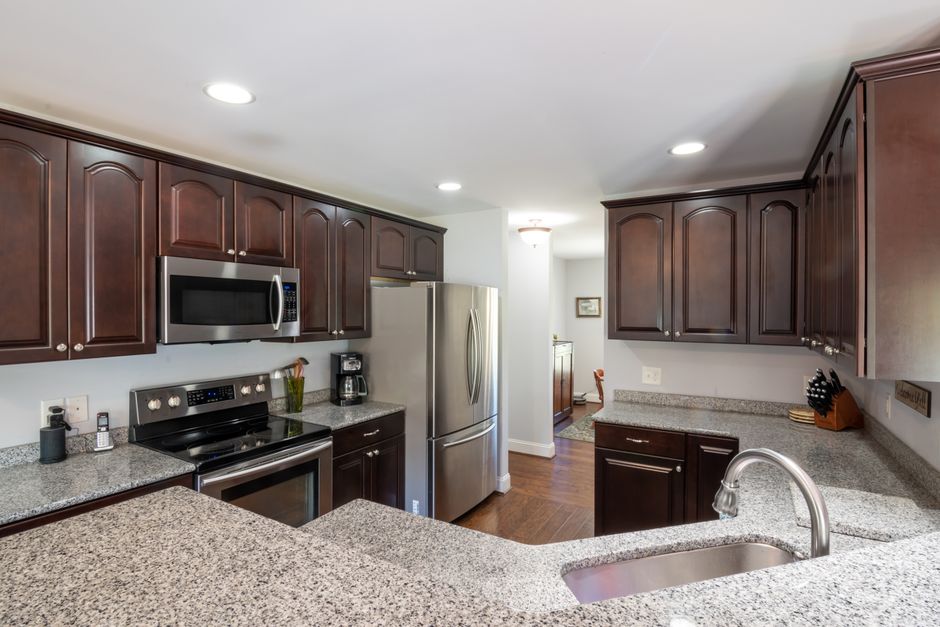
The best backsplash for a busy stone pattern is a quiet one: a single, consistent tile in a tone pulled from the stone's secondary color, set with grout that nearly disappears. A heavily veined or speckled slab already supplies all the movement a kitchen wall needs. When the backsplash adds its own pattern, the two compete at eye level and the room starts to feel cluttered.
That is the guiding idea for every decision below. Pick one star, make the stone it, and let everything else support it.
Start With the Whole Slab, Not a Chip
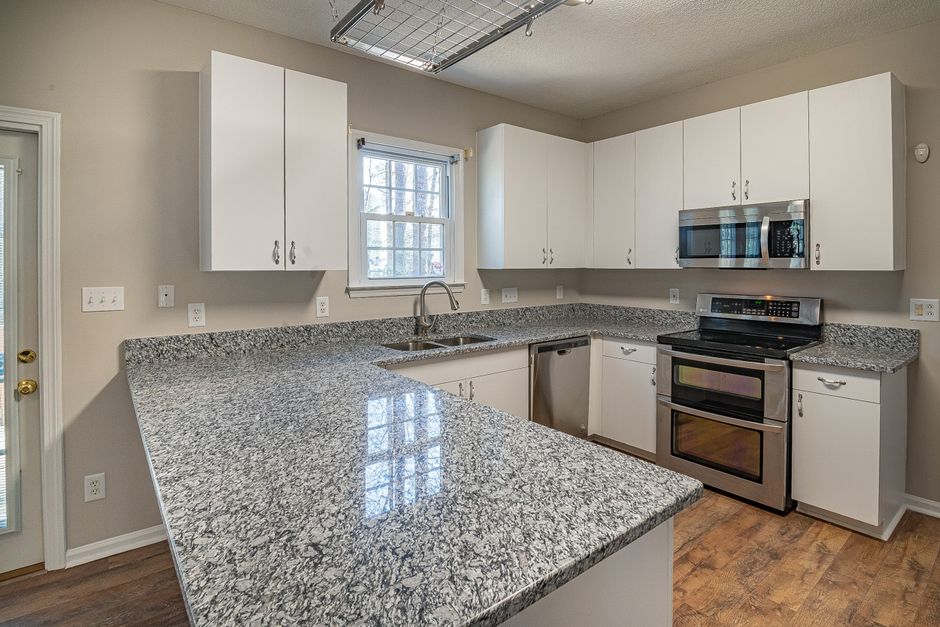
A 4 inch sample can miss the large veins, color drifts and clusters that appear across a full slab. Choosing tile against a small chip is how a backsplash ends up fighting the stone it was meant to flatter.
Visit the stone yard and look at the actual slab, or ask the fabricator for photos of the full slab taken in daylight. Then bring tile samples to that slab, or compare them against the photos on a screen set to full brightness, and judge them side by side. This applies to natural stone and to engineered stone from makers such as Cambria alike, since both can show large-scale variation that a chip hides.
Pull Color From a Secondary Tone
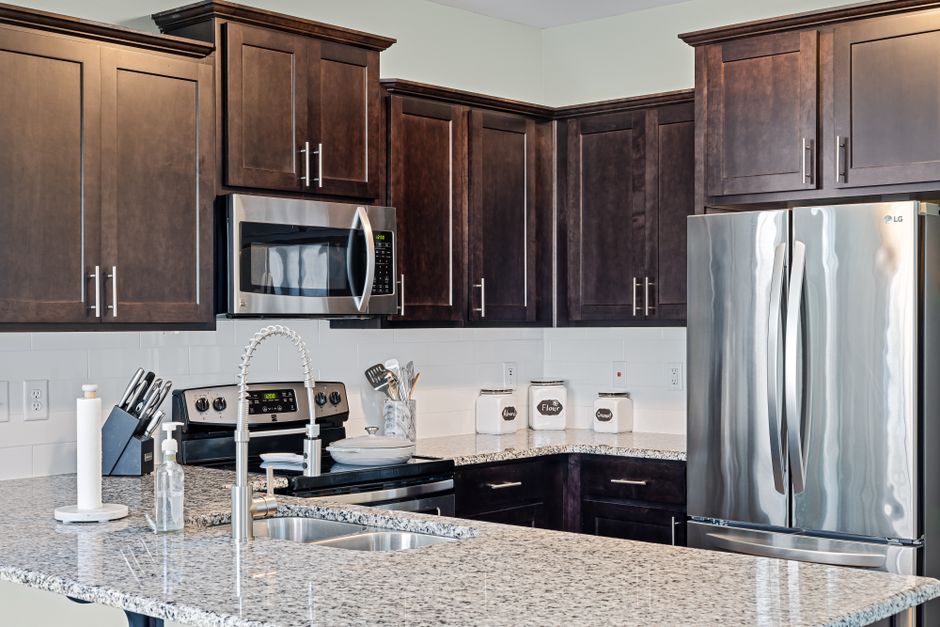
Matching the dominant background of the slab exactly rarely works. A white countertop with gray veins does not need a white backsplash; it usually looks better with a soft gray, taupe or pale gold borrowed from the veining. A black granite with gold flecks can take a warm, muted tile that echoes the flecks without copying the base.
Coordinating tones beats an exact match. An exact match tends to look like a near miss, while a related tone reads as intentional.
Check Undertones First
Before comparing color, compare undertone. A warm white with a cream or yellow cast and a cool white with a blue or gray cast can clash even though both are called "white." Plain white subway tile is not a safe default for every counter: its undertone can look dull or stark beside a warm stone, or yellowed beside a cool one. Hold the tile directly against the slab and look at the edge where they would meet.
Test Under Madison Light
Madison's winter days are short and often overcast, which gives flatter, cooler daylight than summer. A tile that looked right in July can look dingy or slightly off next to the stone in January. Look at samples in the kitchen at different times of day, and leave them taped up for a few days if you can.
Choose the Bulb Before the Tile
The backsplash sits directly in the glow of the under cabinet lights, so their color temperature matters. Warm LEDs push stone and tile toward yellow, and cool LEDs push them toward blue. Settle on the bulb color first, then check the samples under it. Changing the lights after the tile is up can undo a careful match.
Keep the Tile Itself Simple
Handmade-look tile, zellige style tile and anything with strong shade variation add a second layer of movement. Over heavy veining, consistent color and a simple shape work best: a plain rectangle, a vertical stack or a basic square.
Scale contrast helps too:
- A speckled granite with fine, even grain pairs well with larger, calmer tile.
- A slab with big, dramatic veins can handle a small, quiet tile as long as the color stays restrained.
Mixing patterns is not forbidden. It just works only when scale and color are deliberately contrasted, and the safest version is still one busy surface and one calm one.
Treat Grout as Part of the Color Plan
High contrast grout draws a grid across the wall that fights the stone. Grout close to the tile color, or close to a tone in the countertop, keeps the wall calm. Dark grout does not hide every problem and still needs cleaning, so choose it for how it looks, not as a shortcut.
Think About Sheen
Polished stone beside glossy tile can look cohesive. Honed or leathered stone often looks better with matte tile. Whichever way you go, make it a choice rather than an accident. Glossy tile also makes an uneven installation easier to see.
Decide the Height on Purpose
Three layouts are common: a short 4 inch splash of matching stone with paint or tile above, tile up to the underside of the upper cabinets, or full height to the ceiling where there are no uppers.
With a patterned slab, a short stone splash under busy tile adds a third element to the wall. Choose either the short splash alone with paint above, or a full splash, but not a short splash topped with patterned tile.
Consider Running the Stone Up the Wall
A slab backsplash from the same material removes the matching problem entirely. With veined stone, ask the fabricator to lay out the cuts so the veins continue from the counter onto the wall, and approve that layout before anything is cut. Whether a slab backsplash costs more or less than tile depends on the job, so compare actual quotes for your kitchen.
Plan for Madison's Older Walls
Many Madison homes, including the bungalows and older houses on the Near East Side and around Vilas, have plaster walls that bow or lean. Full height stone and large format tile show those flaws as gaps and uneven edges. Check the wall with a straightedge and correct it before templating.
Template a slab backsplash only after the cabinets and countertop are installed. Measuring early risks a poor fit around windows, outlets and uneven corners.
Move Outlets Before the Cutting
Openings are cut at the shop or on site, and a badly placed box can split a prominent vein. Ask whether boxes can shift so the cutouts land in quieter parts of the pattern. Then choose cover plates in a color close to the backsplash, or low profile and recessed styles, so plastic rectangles do not interrupt the stone or tile.
Get the Installation Details Right
Under cabinet lights shine almost parallel to the wall, so any tile edge that sticks out casts a shadow. This is called lippage, and it shows most with long rectangular tile. Insist on a flat installation.
A few more details protect the finished look:
- Flexible caulk at the counter and corners. Use caulk, not grout, where the backsplash meets the countertop and at inside corners. Dry heated winters and humid summers move framing and cabinets slightly, and rigid grout in those joints tends to crack.
- White setting material behind glass tile. Glass is translucent, so gray thinset and trowel ridges can show through and shift the color, which can throw off a careful match to the stone.
- Finished edges. Where tile stops at a wall or cabinet end, plan a bullnose, a metal trim profile or a polished stone edge, and decide before ordering so enough trim is bought.
- One production lot. Tile shade can vary between lots, which is especially noticeable next to a stone chosen for its color. Order extra from a single lot and keep spares for future repairs.
Protect the Surface Behind the Range
Marble and some granites absorb cooking oil and splashes, which matters most behind the cooktop. Sealing slows absorption but does not make natural stone stain proof, and it does nothing to prevent acid etching. Reapply on the schedule the fabricator or sealer maker recommends, and test by seeing whether water beads or darkens the surface.
Think twice about light marble directly behind the range. Grease and tomato splatter can etch or stain it, and a busy pattern will not fully hide the dull spots that acid leaves on polished calcite stone. Remember too that engineered stone is not natural stone and is not fully heat proof, so it is not a license to ignore the range wall.
Cut Engineered Stone Safely
Cutting engineered stone releases fine crystalline silica (silicon dioxide), which is linked to silicosis. Backsplash pieces should be cut by the fabricator with water and dust control. Leftover pieces should never be dry cut in the garage.
A Quick Order of Decisions
- See the full slab and note its secondary tones.
- Choose the under cabinet bulb color.
- Compare undertones, then color, in Madison light across different times of day.
- Pick a simple tile shape and low variation, then match or deliberately contrast the sheen.
- Set grout close to the tile or a stone tone.
- Decide the height, then settle outlets, edges and trim.
- Order extra tile from one lot.
A busy stone countertop does not need a backsplash that competes. It needs one that makes the stone look intentional, and in most kitchens that means calm color, simple shape and quiet grout.