Choosing a Countertop Material for Wisconsin Seasons
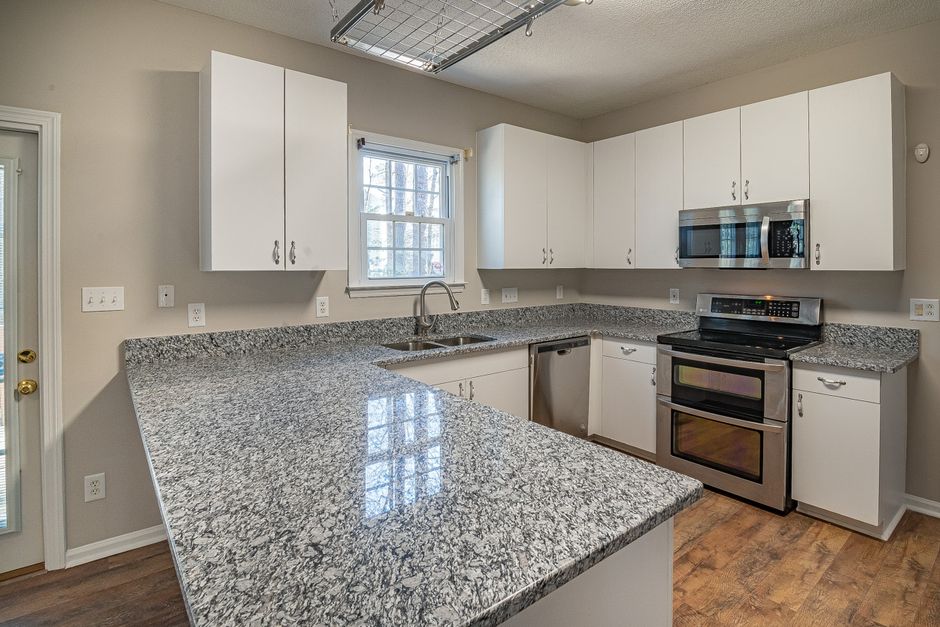
Material choice starts with what the surface will meet every day. Each material below is described the way it behaves on the shop floor, and the work logged through countertops madison andover mn for kitchen countertops around Madison, WI and the rest of Dane County bears that out, from granite to laminate.
Granite and marble
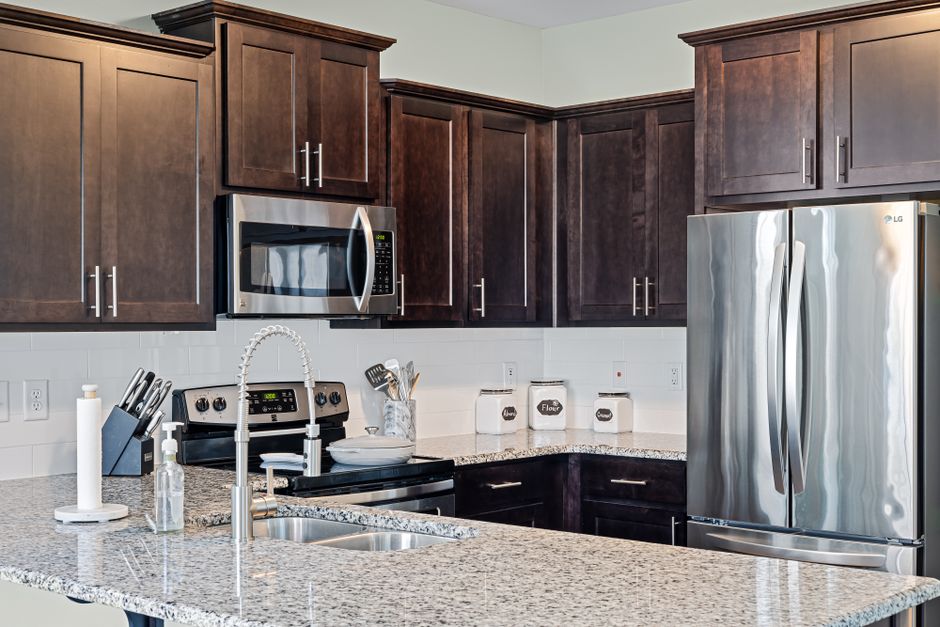
Granite is an igneous stone of interlocking mineral crystals. Many granites are porous enough to benefit from a penetrating sealer, so a few drops of water left on the slab for a few minutes show whether it is time to reseal. Marble is mostly calcite, so lemon juice and vinegar etch it and leave dull spots even when it is sealed. Sealer slows oil and wine from soaking in, but it does nothing against acid. A honed finish hides etching better than a polished one.
Quartz and solid surface
Engineered quartz is crushed quartz bound with polymer resin. The resin can discolor from high heat or long exposure to direct sunlight, so hot pans go on a trivet and a bright window run gets a second look. Quartz does not need routine sealing the way natural stone does. Solid surface is an acrylic or polyester material that can be sanded and polished to remove scratches and minor burns, which is a repair stone and quartz cannot match.
Laminate
Laminate is layers of resin saturated paper bonded to a particleboard or fiberboard core. The face handles splashes well. The core does not. Water that reaches it makes it swell, and the swelling does not go back down. Sink cutouts, the dishwasher edge and every seam need a continuous bead of sealant, and the backsplash joint should be checked once a year.
Butcher block
Butcher block is solid wood, and wood moves. It shrinks in dry heated winter air and swells in humid summer air, so the top must be fastened in a way that allows movement. Slotted holes or sliding buttons do that. Screws driven tight through the cabinet rails will split the top or open a joint by February. Oil the top, and oil the underside and the sink cutout edges too, so moisture does not enter unevenly.
Movement, seams and edges
Stone and quartz stay dimensionally stable through the indoor humidity swings that move wood, so they are fastened to cabinets with dabs of adhesive and no allowance for movement. What matters is support. A seam never crosses an unsupported span, and seam placement is set before cutting, away from the sink cutout and the cooktop corners where stress gathers. An overhang with no bracing behind it will crack at the cutout. The template is taken after the cabinets are set and level, and the edge profile is chosen then, whether an eased edge, a bullnose or a heavier build-up. A small sample overstates the edge, so the full profile is checked against a cut piece before fabrication.